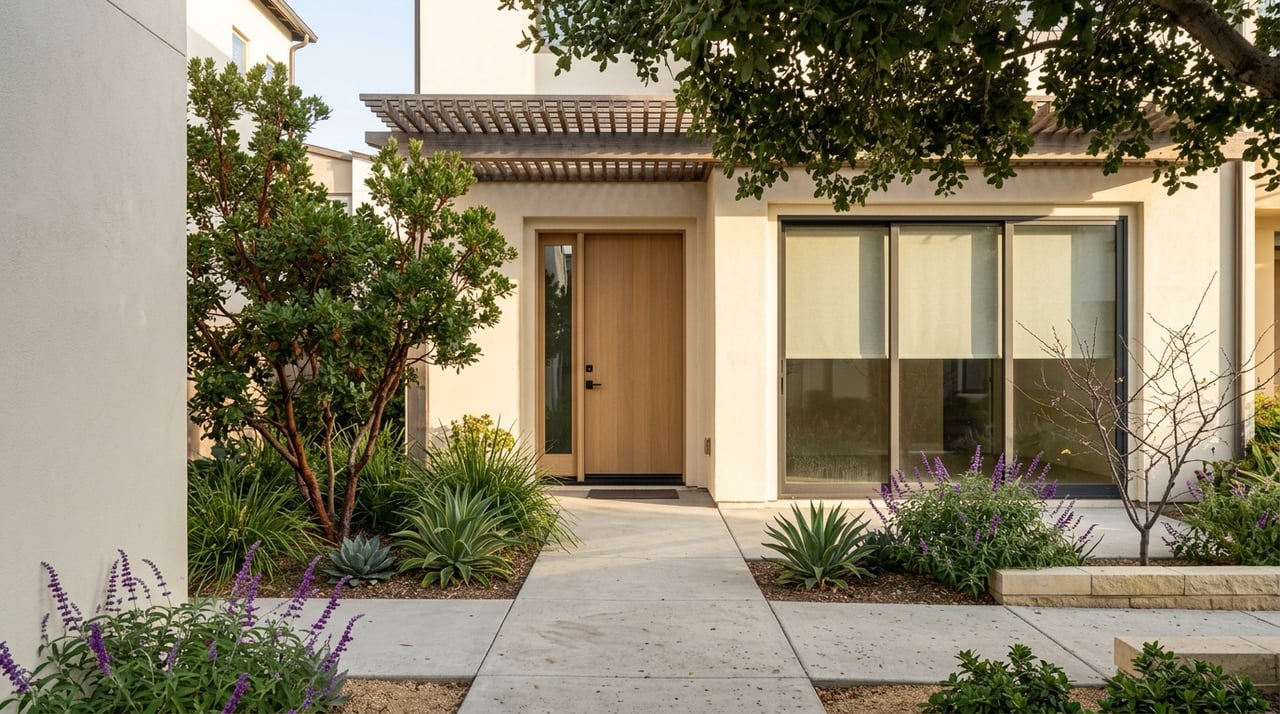
Thousand Oaks Homebuyers Guide to Comparing Neighborhoods
May 14, 2026
May 14, 2026
Choosing a Thousand Oaks neighborhood can feel harder than choosing a house. That is because Thousand Oaks does not really behave like one uniform market. It acts more like a collection of distinct pockets, each with its own price range, housing mix, commute rhythm, and access to parks and trails. If you want to narrow your search with more confidence, this guide will help you compare the main options and focus on what fits your lifestyle and budget. Let’s dive in.
In March 2026, the citywide median sale price in Thousand Oaks was about $1.1 million. At the same time, typical home values varied quite a bit by ZIP code, from about $1.0 million in 91320 and 91360 to about $1.56 million in 91361. That spread is one reason buyers often compare specific areas instead of treating the city as one market.
The housing stock also adds to those differences. SCAG reports that 67.6% of homes are single-family detached, 11.2% are single-family attached, 18.6% are multifamily, and 2.6% are mobile homes. Since 75.3% of the housing stock was built after 1970, you will find a mix of older tracts, attached options, and newer or more master-planned neighborhoods depending on where you look.
A smart neighborhood choice usually starts with how you live day to day. In Thousand Oaks, buyers often weigh freeway access, trail access, parks, and errand convenience more heavily than transit access alone. That is because this is still a driving-focused market.
SCAG shows that 80% of workers drove alone, only 1% used transit, and 71.1% of households had two or more vehicles. About 33.2% of workers spent more than 30 minutes commuting one way, so location can shape your week in a very real way. If your routine includes regular trips toward Los Angeles, Westlake Village, Camarillo, Simi Valley, Ventura, Oxnard, Agoura Hills, or Calabasas, your ideal pocket may look very different from someone prioritizing trail access and a quieter setting.
If you want one of the more attainable entry points into Thousand Oaks, Newbury Park and the broader 91320 area deserve a close look. Typical home value here is about $1.025 million, with a median sale price around $923,000. Current inventory can span from a 55+ manufactured home around $340,000 to detached homes around $1.18 million, Dos Vientos homes around $1.38 million, and luxury estates reaching roughly $2.6 million.
That range gives you more flexibility than many buyers expect. You may find older detached tracts, some lower-cost manufactured inventory, and higher-end master-planned homes in the same broader area. For buyers who want options without immediately jumping to the top of the Thousand Oaks price stack, that can be very appealing.
Parks and open space are a major draw here. Dos Vientos Community Park and Borchard Community Park support everyday recreation, while Wildwood Regional Park offers 14 trails across 17 miles. If your ideal weekend includes outdoor time close to home, this side of town often rises to the top.
From a practical standpoint, this pocket also offers useful transportation connections. The city lists Route 40 for Newbury Park-Borchard and Route 45 for Newbury Park-Rancho Conejo, and the regional transportation system includes a park-and-ride at Borchard Road and the 101. That makes the area a strong fit if you want suburban space with access to freeway-oriented commuting patterns.
For many buyers, central and east Thousand Oaks offer the best all-around balance. Typical values are about $1.02 million in 91360 and about $1.21 million in 91362. Inventory examples range from a Hidden Canyon home around $745,000 to detached homes around $1.3 million to $1.4 million, plus larger executive homes around $1.84 million.
This variety gives you room to compare attached homes, smaller detached homes, and move-up options without leaving the same general area. If you are trying to balance budget, convenience, and long-term flexibility, this part of Thousand Oaks is often where the search starts to make sense.
This area also concentrates many of the civic and recreational features buyers use regularly. Thousand Oaks Community Park, Conejo Creek North Park, and Wildwood Regional Park are all nearby. Conejo Creek North is also home to the Thousand Oaks Library, Teen Center, and Goebel Adult Center, which helps explain why many people view this pocket as the convenience core.
Transit and errand access also support that reputation. The city transit system identifies the Transportation Center, The Oaks Mall, Brimhall Library, Newbury Park Branch Library, and the Senior Center as schedule pickup points. Even if you drive most of the time, those nodes are a helpful sign of where daily activity tends to cluster.
If your search leans more toward higher price points, attached communities with amenities, or an easier regional commute pattern, the 91361 area may stand out. Typical home value here is about $1.56 million, and the median sale price is about $1.78 million. Current examples include a Stoneybrook townhouse around $1.31 million and a South Shore Hills single-family home around $1.84 million.
This part of the market tends to feel more HOA-oriented and established. The city GIS identifies Westlake North Ranch as a specific plan, and HOA records point to long-standing communities such as Braemar North Ranch and First Neighborhood. For some buyers, that structure and amenity orientation is a plus. For others, HOA rules and costs may narrow the appeal.
Commute position is another reason buyers focus here. The broader Thousand Oaks area includes regional park-and-ride locations at the Transportation Center, Janss Road at the 23 Freeway, and Borchard Road at the 101. If your work or lifestyle regularly pulls you toward other regional job centers, this side of the market may justify the higher price point.
Oak Park is not part of Thousand Oaks proper, but many buyers compare it side by side with Thousand Oaks neighborhoods. Typical home value in 91377 is about $1.15 million, with current examples from about $830,000 to about $1.34 million. Ventura County describes Oak Park as its largest unincorporated community and notes that it built out in 2002, so the market is largely resale-driven rather than fueled by new construction.
The biggest differentiator here is open space. Ventura County reports that roughly 60% of Oak Park land is open space managed by RSRPD, and the surrounding open spaces are permanently dedicated parklands. If privacy, preserved surroundings, and a more tucked-away feel matter to you, Oak Park can be a compelling alternative.
Commute routes are more limited, which is important to understand upfront. Kanan Road serves as the major access point to the 101, and Lindero Canyon Road connects from Kanan toward Thousand Oaks, Westlake, and the 23 Freeway. For some buyers, that tradeoff is well worth it. For others, it can shape the entire decision.
You do not need to know the perfect neighborhood on day one. You just need to know which tradeoffs matter most to you. In Thousand Oaks, your best fit usually comes down to price, housing type, open-space access, and how you move through your week.
Here is a simple way to frame your search:
Many homebuyers spend too much time comparing square footage and not enough time comparing the pattern of daily life. A beautiful home can feel less practical if errands, freeway access, or recreation are not aligned with how you actually live. In Thousand Oaks, those details often shape satisfaction more than buyers expect.
It also helps to remember that homes here can move quickly. Depending on the pocket, homes are going pending in roughly 15 to 24 days. When you already know which submarkets fit your priorities, you can act more decisively when the right property hits the market.
Before you commit to one area, try visiting at a few different times of day. Drive the routes you would actually use, whether that is to the 101, the 23, local parks, or your regular shopping stops. A neighborhood that looks great on paper may feel very different during a weekday morning or late afternoon.
It also helps to compare more than one housing type in each area. In Thousand Oaks, one ZIP code can include attached homes, detached homes, and more amenity-oriented communities at very different price points. Looking at that full range can open options you might otherwise miss.
If you are weighing Thousand Oaks against nearby Ventura County areas, the best approach is a side-by-side strategy rather than a city-by-city assumption. That is where local guidance matters. If you want help narrowing your shortlist and matching it to your goals, connect with Jodi rosales for thoughtful, local guidance tailored to the way you want to live.
Stay up to date on the latest real estate trends.
Experience a real estate partnership built on trust, expertise, and genuine care. Jodi brings a lifelong understanding of what “home” truly means to every client and every decision.