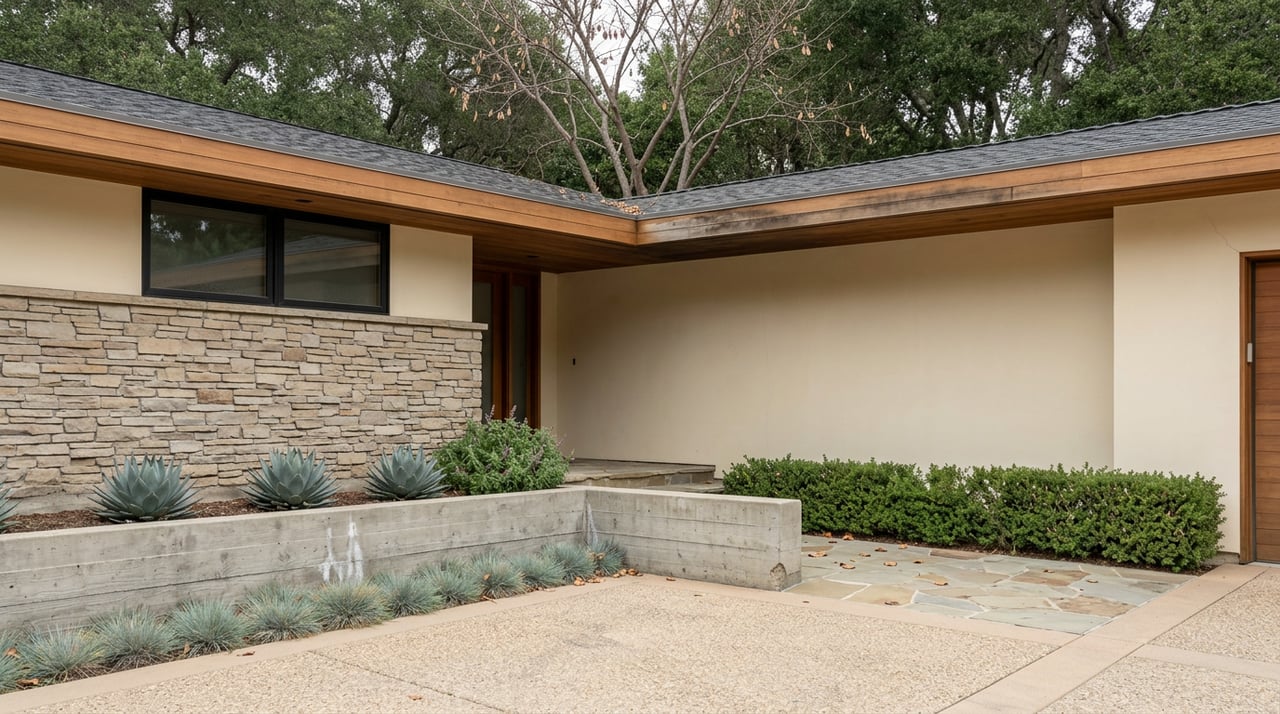
Why the Same Price Tag Buys a Different Monthly Payment in Thousand Oaks
August 20, 2026
August 20, 2026
Two listings land in your inbox on the same afternoon. Same list price, give or take a few thousand dollars. Same square footage, same bedroom count, same Conejo Valley Unified school boundary. On paper, they're twins. Then your lender runs the numbers and one of them costs several hundred dollars more every month than the other, and nothing on either listing sheet explains why.
This happens constantly in Thousand Oaks, and it happens for a reason that has nothing to do with the mortgage rate you're quoted. It has to do with what's attached to the parcel itself, underneath the sale price, in a layer most buyers never think to ask about until they're already in escrow.
A home's true monthly cost in Thousand Oaks rests on three separate line items, not one. There's the base property tax, which every California homeowner pays under Proposition 13: roughly 1 percent of assessed value, with modest annual increases capped near 2 percent. There's HOA dues, paid to a homeowners association for common-area upkeep and amenities. And there's Mello-Roos, a special tax assessment that repays infrastructure bonds in specific developments.
A given home can carry one of these, two of them, or all three. It can also carry none. That's the part that surprises people. A newer, more expensive-looking home in a master-planned tract might have a heavier total bill than an older, cheaper-looking home a mile away, because the older home was built before Mello-Roos existed as a financing tool and never joined an HOA in the first place.
The listing sheet's "taxes" field almost never captures this. It typically quotes the base 1 percent rate and stops there, which means the number a buyer sees during a first search and the number that actually hits their bank account can diverge by thousands of dollars a year.
Dos Vientos, the master-planned community that anchors the southern half of Newbury Park, is the clearest local example of how much variation can exist inside what looks like a single neighborhood. Construction there began in 1992 and has continued in phases ever since, with Toll Brothers and Lennar still closing homes in 2026.
Every phase of Dos Vientos carries a Mello-Roos Community Facilities District assessment, but the size of that assessment depends entirely on when the phase was built and how much of the original infrastructure bond remains outstanding. Phase 1 assessments are near or past payoff, with some running under $800 a year. Phase 4, the newest build-out with homes ranging from 4,500 to 6,500 square feet and pricing that can exceed $3 million, carries assessments running $2,500 to $4,500 a year, with 35 to 40 years still left on the bond.
That's not a small spread. It means two Dos Vientos homes at similar price points, separated only by which phase they sit in, can differ by three or four thousand dollars a year before either owner has paid a dollar toward a mortgage. Phase 4 also carries the most restrictive HOA architectural guidelines in the community, so a buyer planning any exterior change, from a new paint color to a fence, should expect a design review process that typically takes two to four weeks for approval.
Newer construction in Thousand Oaks tends to read as simpler and more turnkey. The Mello-Roos math says otherwise. Newer often means a longer bond schedule still being paid down, not a shorter one.
Now compare that to a different kind of Thousand Oaks neighborhood entirely. Conejo Oaks, a community of more than 400 custom homes on large lots dating back to 1957, has no HOA. Neither does Lynn Ranch, known for its equestrian lots and rural feel within the city, or Wildwood, prized for its proximity to open space and its more accessible price points. None of these predate Mello-Roos by coincidence. They predate it by decades, which means there's no CFD bond to be paying down because none was ever issued against these parcels.
The trade-off is real, and it runs the other direction from what buyers expect. Without an HOA, there's no reserve fund, no architectural committee, and no consistency requirement from one property to the next. One home might be immaculately maintained and its neighbor might not be. For some buyers, that variability is the whole appeal: no waiting on committee approval to repaint a fence or add a horse structure. For others, it means doing more homework on a house-by-house basis rather than trusting a managed association to keep the block consistent.
Here's the piece worth sitting with: the sticker price on a Conejo Oaks or Lynn Ranch home already reflects the land, the lot size, and the lack of ongoing assessments. Two buyers comparing that home to a same-priced Dos Vientos Phase 4 property aren't actually comparing equivalent monthly costs. They're comparing a house with a known, finite bottom line to one with a second tax bill that runs for decades.
HOA dues in the Conejo Valley follow their own tiers, separate from Mello-Roos entirely. A no-amenity single-family association, the kind that just maintains an entry monument or minimal common-area landscaping, can run well under $200 a month. Communities with a pool and clubhouse commonly land in the $200 to $400 range. At the top, guard-gated communities with private streets, the kind found in parts of North Ranch and in Lake Sherwood, frequently run $400 to $600 a month or more, because those dues fund staffed entry gates and private road maintenance that a city would otherwise handle on public streets.
| HOA Tier | Typical Monthly Dues | What It Funds |
|---|---|---|
| No-amenity single-family | Under $200 | Entry monument, minimal common-area landscaping |
| Amenity-rich, non-gated | $200–$400 | Pool, clubhouse, shared paseo or park system |
| Guard-gated, private streets | $400–$600+ | Staffed gate, private road maintenance, added insurance |
High dues aren't automatically a red flag and low dues aren't automatically a bargain. High dues can mean an association is fully funding its reserves and maintaining real infrastructure. Low dues can mean the opposite, an underfunded reserve quietly building toward a special assessment down the road. The only way to know which situation you're looking at is to read the reserve study itself, not the monthly number.
Here's a wrinkle that catches even buyers who think they've done their homework. Thousand Oaks has more than one kind of Mello-Roos obligation moving through its parcels, and they're not interchangeable. Beyond the development-specific CFDs tied to master-planned communities like Dos Vientos, the city also carries older Mello-Roos bonds tied to public infrastructure, financed through a district that issued bonds in 1995 and refinanced them in 2012, funding things like public parking structures, walkways, and street improvements rather than any single subdivision.
The takeaway isn't that one of these is worse. It's that the word "Mello-Roos" on a disclosure doesn't tell you which obligation you're looking at, what it's funding, or how many years remain. That only comes from asking for the specific CFD documentation attached to the parcel.
Before treating any two homes as comparable on price alone, request:
Ventura County property tax bills are paid in two installments each year, with the first due by November 1 and turning delinquent after December 10, so timing matters if you're closing in the fall. The county's own records are the only reliable source for what a specific parcel actually owes, and they're worth pulling before you fall in love with a number on a portal.
The median price for Thousand Oaks tells you what a typical buyer paid. It doesn't tell you what that buyer is still paying, year after year, on top of the mortgage. That gap is where the real comparison between two listings actually lives.
If you're weighing a newer Newbury Park tract against an established Thousand Oaks neighborhood and want someone to pull the actual numbers on a specific address before you write an offer, Jodi Rosales is glad to help. Let's Connect.
Stay up to date on the latest real estate trends.
Experience a real estate partnership built on trust, expertise, and genuine care. Jodi brings a lifelong understanding of what “home” truly means to every client and every decision.