The Oak Tree Clause That Can Complicate a Thousand Oaks Closing
September 3, 2026
September 3, 2026
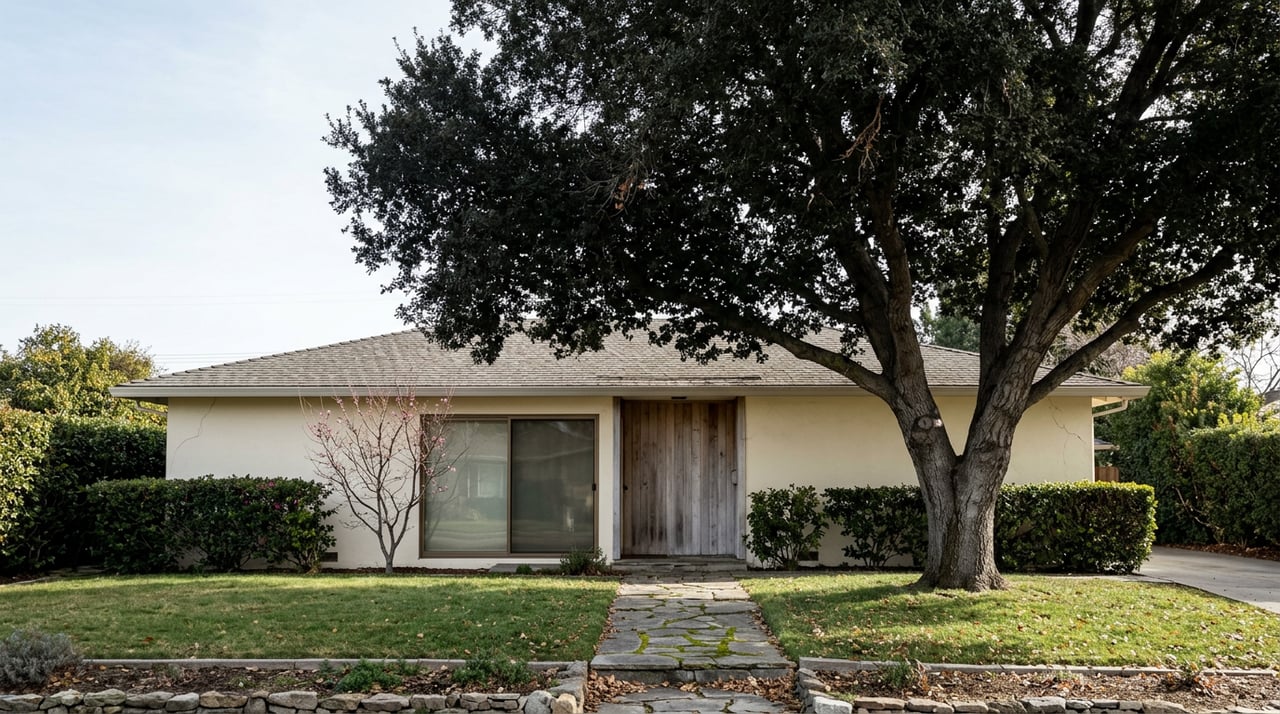
On July 20, the board of the Westlake North Property Owners' Association voted to remove a heritage oak in North Ranch so a driveway could go in. The tree, tagged Oak Tree #1 by the city, is six feet in diameter, seventy-five feet tall, with a canopy stretching seventy feet across. City records trace its age to the 1400s, roughly six centuries, meaning it was already ancient when the Janss family began planning the community that would eventually become Thousand Oaks in the early 1900s. It sits on land that had been marketed by real estate professionals as a conservation opportunity, unsuitable for development.
That land is being developed anyway.
The city's Community Development Department sent the property owners' association an unsolicited letter offering a Class A permit, the category reserved for dead or hazardous trees, and granted approval to remove Oak Tree #1 under an exemption from the standard oak preservation review. An independent, ISA-qualified consulting arborist had examined the same tree and reached a different conclusion: it was healthy, and pruning the deadwood would have brought its risk rating down without removing it at all.
If you're buying, selling, or renovating a home on an oak-covered lot anywhere in Thousand Oaks, this is the part of the story worth sitting with. A tree's protected status is not a fixed line drawn by the ordinance. It's a determination the city makes, case by case, and it can be reversed by a single letter.
Thousand Oaks has regulated its namesake trees since the early 1970s, when the city council passed an emergency ordinance after development had already removed hundreds of oaks in a few short years. The rule that grew out of that moment, now Article 42 of the municipal code, protects every Quercus species over two inches in diameter, according to the city's own tree FAQ. Larger or historically significant non-oak trees can also earn Landmark Tree status, though that designation doesn't apply to single-family lots under two acres.
The protection isn't just around the trunk. The city defines a tree's protected zone as five feet beyond the outer edge of the canopy or fifteen feet from the trunk, whichever distance is greater. Any grading, construction, or soil disturbance inside that zone triggers a permit review, whether the work is a new pool, a home addition, or an ADU.
Landscape architect James Dean, who helped craft the city's tree protections and worked on North Ranch's own development, has called it "one of the best examples of oak tree preservation in California." His account credits the ordinance with saving more than 8,000 oaks during North Ranch's buildout, the same community where Oak Tree #1 now stands.
Here's where the assumption breaks down. Thousand Oaks offers two main permit paths for anyone wanting to touch a protected tree. A Protected Tree Permit covers removal of a healthy tree. An Oak or Landmark Tree Permit covers building or grading near a canopy. Both involve city review before work can begin.
There's a third path, and it's the one that matters most for due diligence: a hazard or dead-tree exemption. If the city determines a tree is dead or poses an imminent danger, it can issue a permit that bypasses the standard preservation review entirely. That's the permit the city offered for Oak Tree #1, over the conclusion of an independent arborist who examined the same tree and found it sound.
| Permit type | What triggers it | What happens next |
|---|---|---|
| Protected Tree Permit | Removing a healthy protected tree | City reviews the application before removal is authorized |
| Oak/Landmark Tree Permit | Building, grading, or paving inside the protected zone | City evaluates the encroachment before issuing the permit |
| Hazard or dead-tree exemption | City identifies the tree as dead or an imminent hazard | Can bypass the standard preservation review, as the North Ranch case shows |
The ordinance also cuts the other way for anyone hoping to just clear a lot. Under the city's enforcement provisions, cutting or damaging a protected tree without authorization can bring a stop-work notice and a restitution requirement, replacing the tree with two or more oaks of equivalent size and value, as determined by the Community Development Director. So the same rule that let one heritage oak fall under a hazard exemption is the rule that can force a homeowner to plant two replacement trees for an unpermitted cut on a much smaller one.
A lot description that mentions mature oaks is telling you two things at once. It's telling you about shade, character, and the kind of privacy a decades-old canopy provides. It's also telling you that any future pool, addition, or ADU on that lot inherits a permitting layer that doesn't show up in a standard property condition disclosure.
Before treating a tree's protected status as settled, in either direction, a few questions are worth asking:
None of these questions are unusual for a Thousand Oaks transaction. They're closer to the septic and easement questions buyers already ask in older neighborhoods. The difference is that oak status can change based on a city letter rather than a survey, which means the answer today isn't guaranteed to be the answer at closing.
The same parcel owner behind Oak Tree #1's removal is scheduled to ask the Thousand Oaks Planning Commission on September 28 for approval to remove additional oaks on the same grove. Whatever the commission decides will set a visible, recent precedent for how the city weighs a hazard determination against an independent arborist's findings, precisely the tension that makes oak status something to verify rather than assume.
For anyone with an active listing, an accepted offer, or a remodel in the pipeline on an oak-covered Thousand Oaks lot, that hearing is worth watching. It's the clearest recent test of how far the exemption reaches, and how far it doesn't.
Do I need a permit to trim a healthy oak on my property? Anything beyond removing deadwood, if the work reaches inside the protected zone, requires a permit. The two-inch diameter threshold means most mature oaks qualify.
What if I want to build a pool or addition near an oak? An Oak or Landmark Tree Permit is required before any grading or construction begins inside the protected zone, five feet beyond the canopy or fifteen feet from the trunk, whichever is greater.
Can a protected oak still be removed? Yes. A hazard or dead-tree determination can exempt a tree from the standard preservation review, even over an independent arborist's finding that the tree is healthy, as the North Ranch case currently shows.
Oak trees are part of what makes a Thousand Oaks lot feel the way it does, but the ordinance protecting them is administrative, not automatic. If you're weighing an offer, a listing, or a remodel on a property with mature oaks, it's worth having someone in your corner who reads the permit history before you write the number. Jodi Rosales works Thousand Oaks and the surrounding Ventura County communities every day. Let's Connect.
Stay up to date on the latest real estate trends.
Experience a real estate partnership built on trust, expertise, and genuine care. Jodi brings a lifelong understanding of what “home” truly means to every client and every decision.